

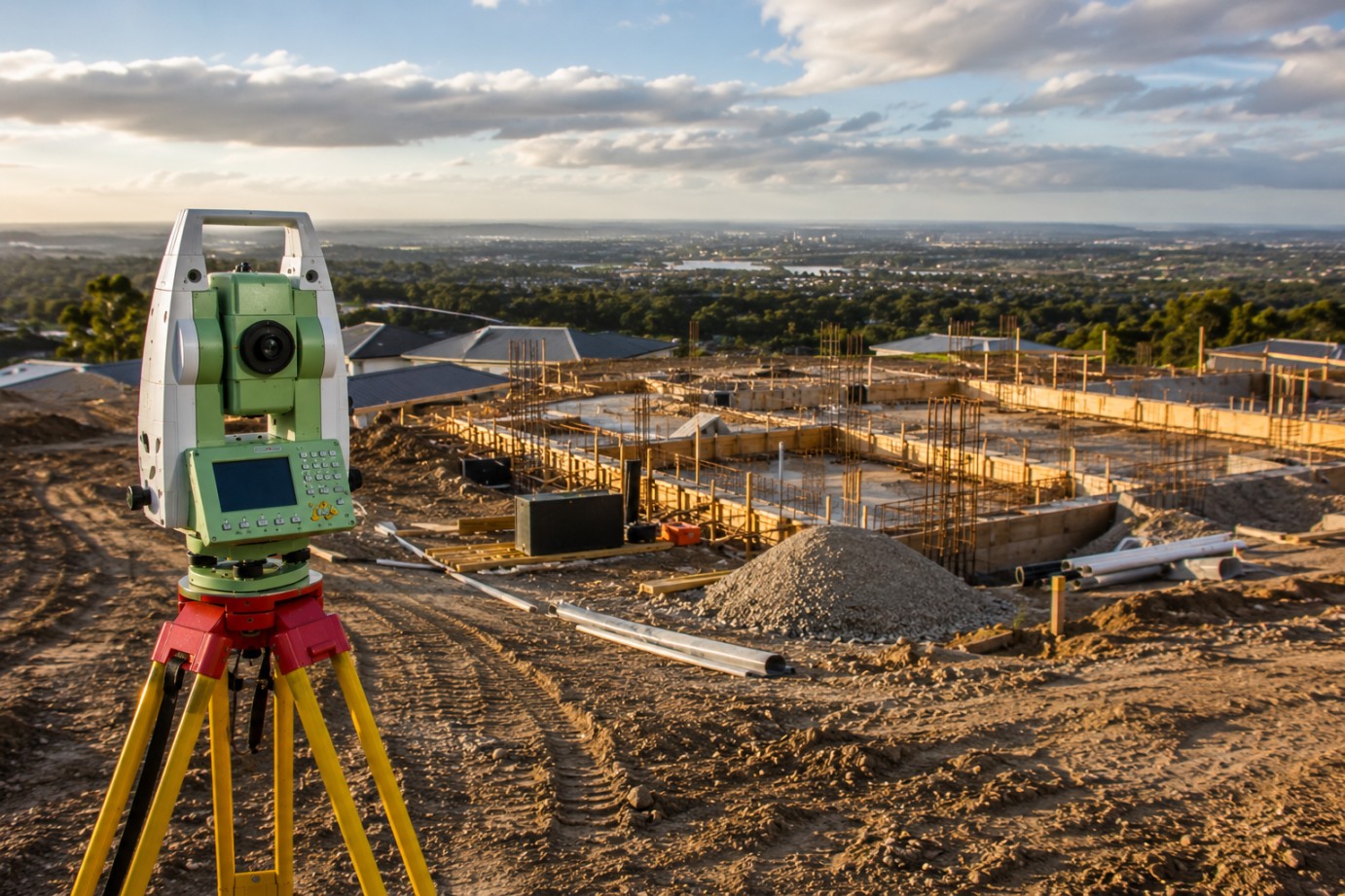

Every construction project begins with optimism. The plans are approved, the budget is allocated, contractors are engaged, and everyone is eager to see work commence. Yet across Australia, countless projects encounter delays before the first concrete slab is poured or the first wall is erected.
While weather, labour shortages, and material availability often attract attention, many delays originate much earlier in the process. They begin with surveying mistakes.
Surveying provides the foundation for design, approvals, engineering, and construction. When survey information is inaccurate, incomplete, outdated, or misunderstood, the consequences can ripple through an entire project. What appears to be a minor oversight at the beginning can evolve into weeks of delays and significant additional costs.
One of the most common mistakes is assuming an old survey is still accurate. Property owners frequently discover plans from previous developments and believe they can simply be reused. Unfortunately, sites change over time. New structures may have been built, retaining walls added, services installed, vegetation removed, or drainage systems altered. A survey completed years ago may no longer reflect current conditions. When architects and engineers design based on outdated information, issues often emerge during approvals or construction, forcing costly revisions.
Another frequent problem involves commissioning the wrong type of survey. Surveying is not a one-size-fits-all service. A local contour survey, detail survey, boundary survey, set-out survey, and identification survey each serve different purposes. Choosing the wrong survey can leave project teams without critical information they need to proceed. In many cases, developers only realise the mistake after consultants request additional data, causing unnecessary delays while further surveys are organised.
Incomplete site information creates another major source of disruption. Modern construction projects involve far more than buildings and boundaries. Existing drainage infrastructure, utility services, retaining walls, access points, vegetation, neighbouring structures, and easements all influence design decisions. When important features are missed during the surveying process, consultants are forced to redesign elements of the project once the omissions are discovered. What should have been a straightforward approval process can quickly become a cycle of revisions and resubmissions.
Boundary assumptions continue to cause problems across residential and commercial developments. Many property owners believe existing fences accurately represent legal boundaries. In reality, fences are often installed without reference to surveyed property lines and can be significantly offset from the true boundary. Designing structures based on assumed boundaries can lead to compliance issues, neighbour disputes, and redesign costs. In severe cases, construction may need to stop while boundary matters are resolved.
Survey timing is another factor that is often overlooked. Some developers wait until plans are already underway before arranging a survey. This approach frequently results in architects and engineers working with estimated dimensions or incomplete site data. Once the survey arrives, important aspects of the design may need adjustment. Engaging a surveyor early allows the project team to make informed decisions from the outset and reduces the likelihood of redesign later.
Communication failures between project consultants also contribute to delays. Surveyors, architects, engineers, planners, and builders each rely on accurate information being shared at the appropriate time. If survey data is not provided promptly or key site constraints are not communicated effectively, important details may be missed during the design phase. Successful projects typically involve close collaboration between all parties from the beginning.
Sloping sites introduce additional challenges. Properties that appear manageable during a casual inspection can contain significant level variations that affect drainage, retaining walls, access, and earthworks. Underestimating the complexity of a sloping block often results in approval issues and construction variations. Accurate contour surveys provide the information needed to understand the site’s topography before design work begins.
Another common mistake involves failing to identify easements. Easements can restrict where buildings, pools, retaining walls, and other structures may be placed. Discovering an easement after plans have been completed can trigger extensive redesign work and approval delays. Surveyors play an important role in identifying these constraints early in the project lifecycle.
Technology has improved surveying accuracy dramatically over recent decades, but mistakes can still occur when project teams rely on assumptions instead of verified data. Satellite imagery, online mapping tools, and real estate photographs may be useful for preliminary investigations, but they are not substitutes for a professional survey. Decisions involving construction approvals and engineering design should always be based on precise measurements collected on site.
The financial impact of surveying mistakes is often underestimated. Delays can affect consultant schedules, contractor availability, financing arrangements, and project cash flow. A relatively small investment in accurate survey information can help avoid much larger expenses later.
The most successful construction projects share a common characteristic. They start with reliable information. Professional surveying provides the foundation upon which architects, engineers, builders, and planners make critical decisions. By investing in accurate surveys and engaging surveyors early, developers can reduce uncertainty, avoid unnecessary delays, and keep projects moving efficiently from concept to completion.
In construction, problems become more expensive the later they are discovered. Surveying helps uncover those problems before they have the opportunity to derail a project.